Polyurea and Polyaspartic Garage Floor Coating in Loretto
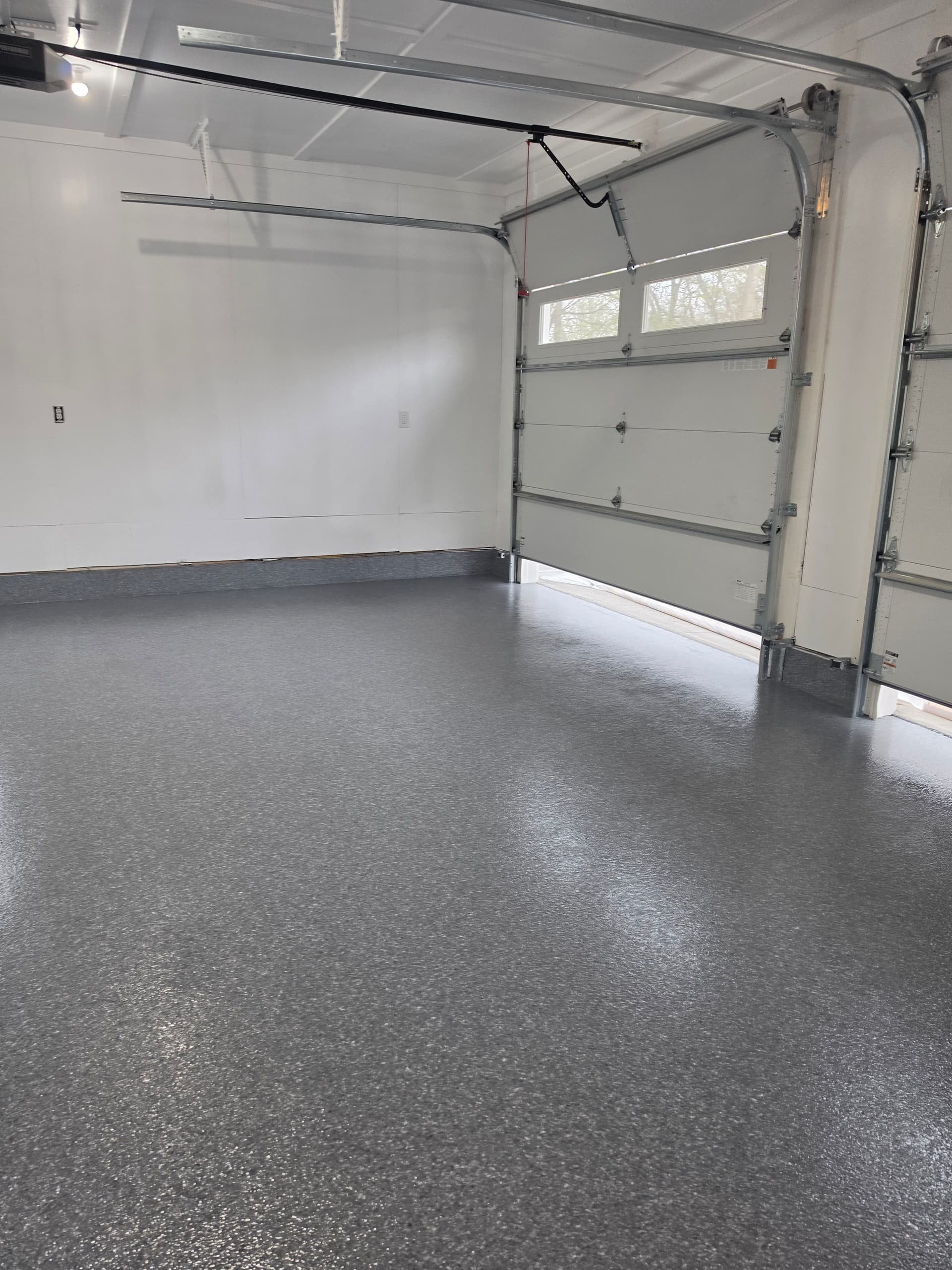
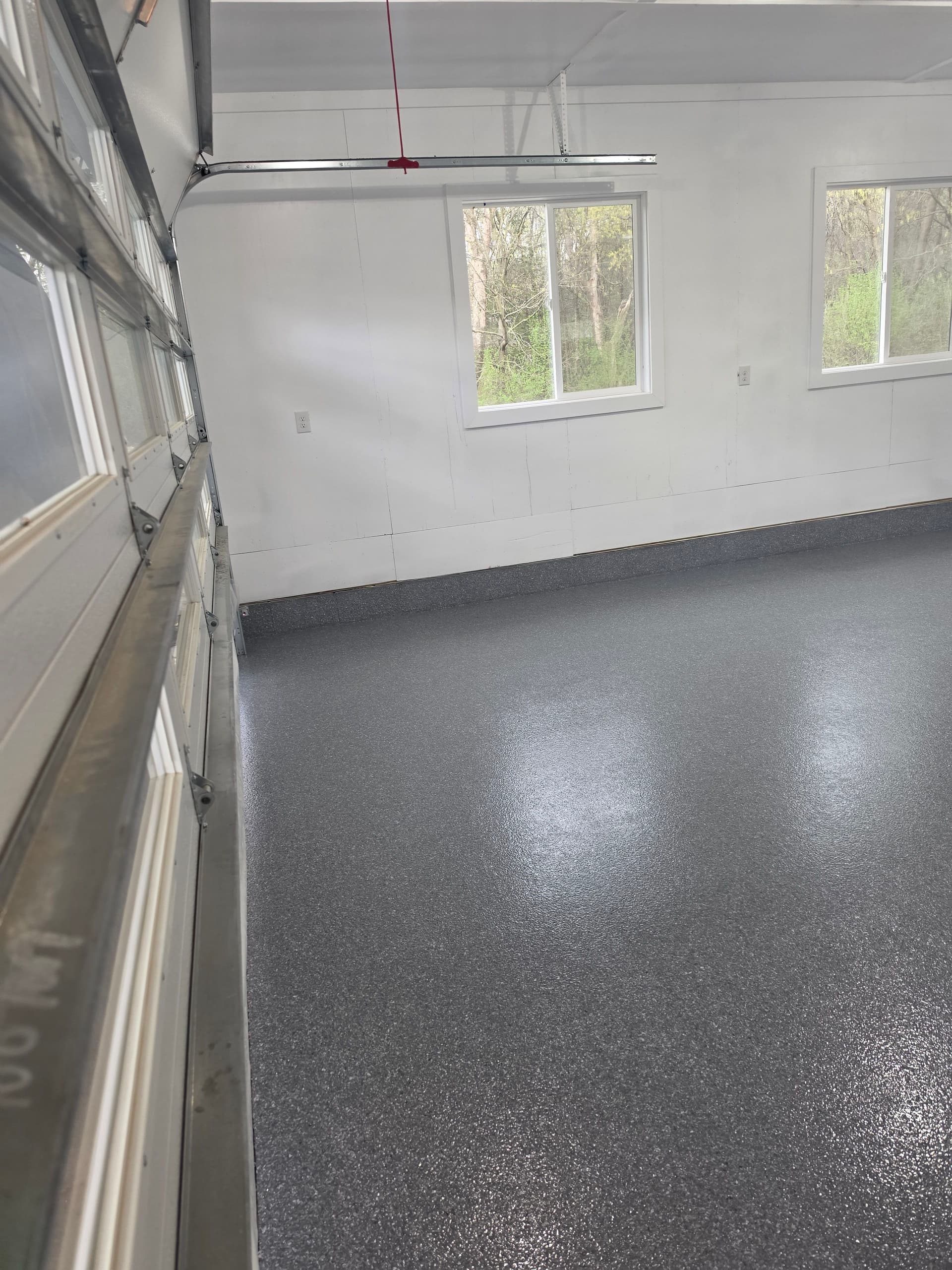
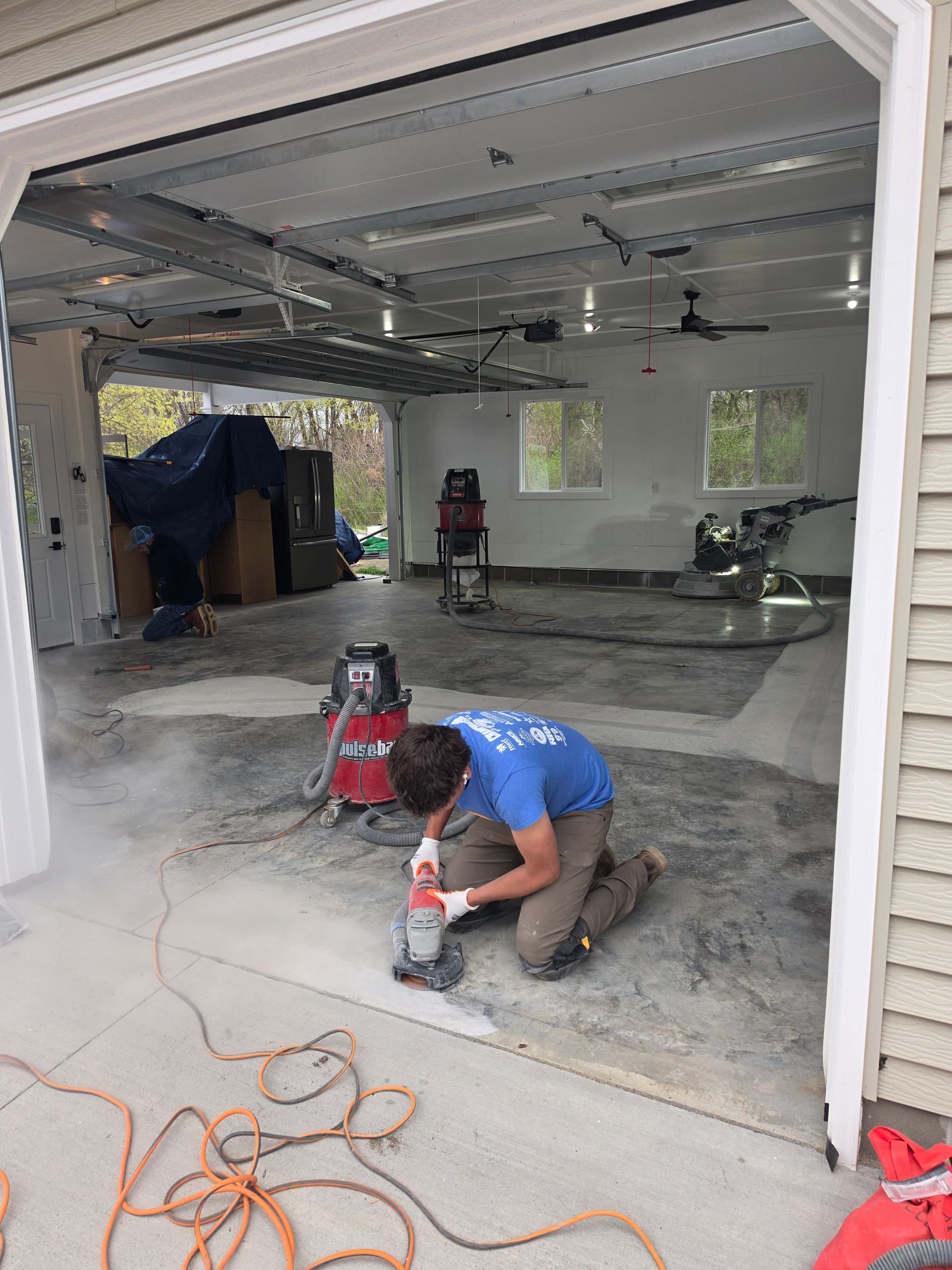
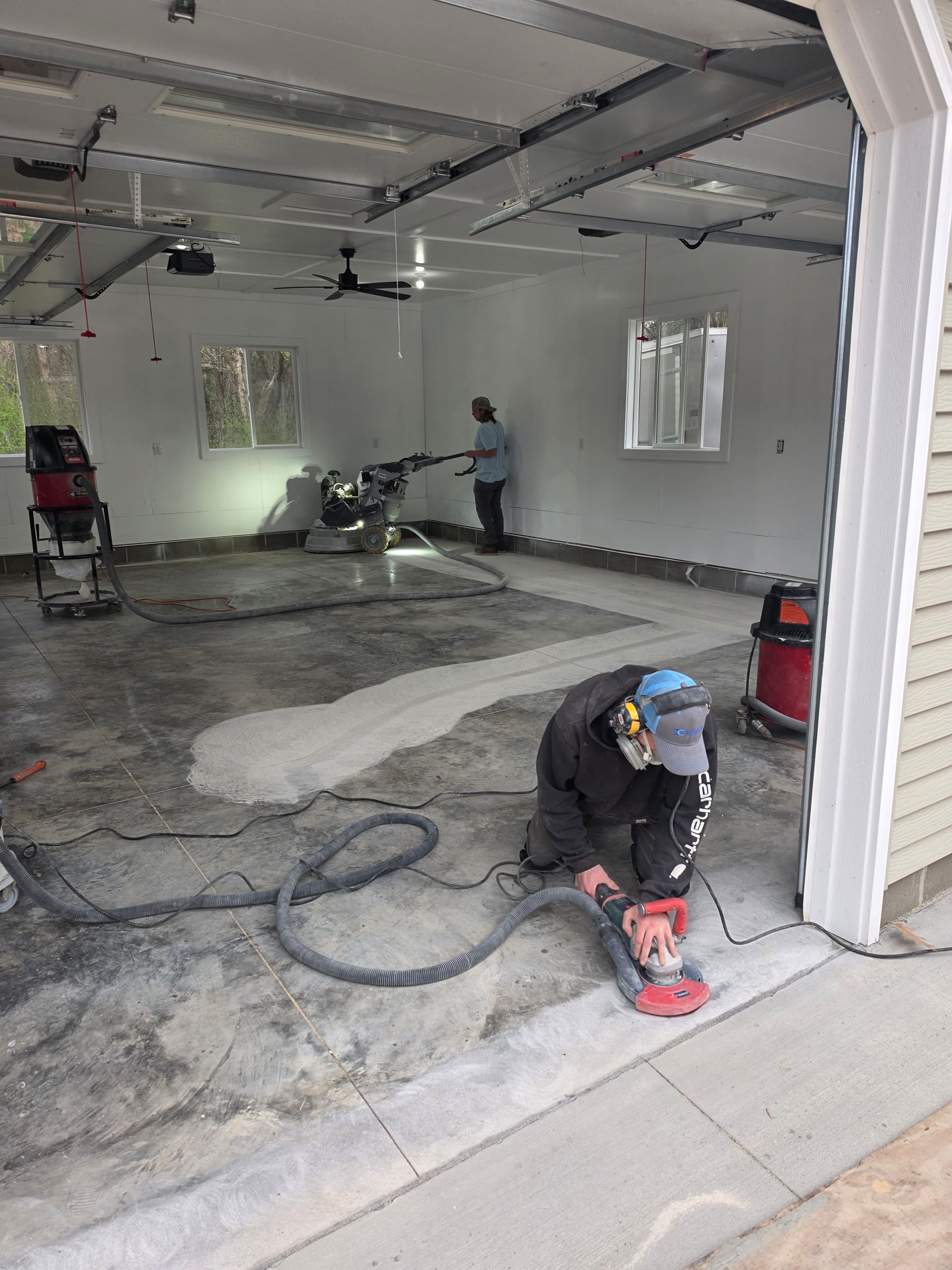
Here's what a full garage floor coating job actually looks like from start to finish. We went into this Loretto garage and handled everything - surface prep, base coat, flake broadcast, and a polyaspartic top coat to seal it all up. No shortcuts, no skipped steps.
Prep is everything with a job like this. Before any coating touches the floor, the concrete has to be mechanically ground down to open up the surface and give the coating something to bond to. We had grinders running across the full slab while our guys worked the edges and joints by hand. Dust collection ran the whole time. It's the kind of work that doesn't show in the final photos, but it's what separates a coating that lasts from one that peels.
Once the surface was ready, we applied a polyurea base coat and broadcast basalt flake across it while still wet. Polyurea cures fast and bonds hard - it's far more flexible and impact-resistant than standard epoxy, which means it handles real garage use without cracking or delaminating. The basalt flake gives it that clean, textured look and adds grip underfoot.
The finish coat is a polyaspartic - a top-tier sealer that locks everything in. It's UV stable, chemical resistant, and holds up against oil, road salt, and anything else that ends up on a garage floor. What you're left with is a surface that's genuinely built for the long haul, not just one that looks good on day one.
Every floor we coat gets this same full process. There's no version of this job where we skip prep and hope the coating holds. If you want it done right, the work happens before the coating ever goes down.